
Transcriptomic analysis of the immune response to in vivo gene electrotransfer in colorectal cancer
Authors: Mariangela De Robertis, Tim Bozic, Iva Santek, Flaviana Marzano, Bostjan Markelc, Domenico Alessandro Silvestris, Apollonia Tullo, Graziano Pesole, Maja Cemazar, Emanuela Signori

Authors: Mariangela De Robertis, Tim Bozic, Iva Santek, Flaviana Marzano, Bostjan Markelc, Domenico Alessandro Silvestris, Apollonia Tullo, Graziano Pesole, Maja Cemazar, Emanuela Signori
Type of Contribution: Research Manuscript
Abstract:
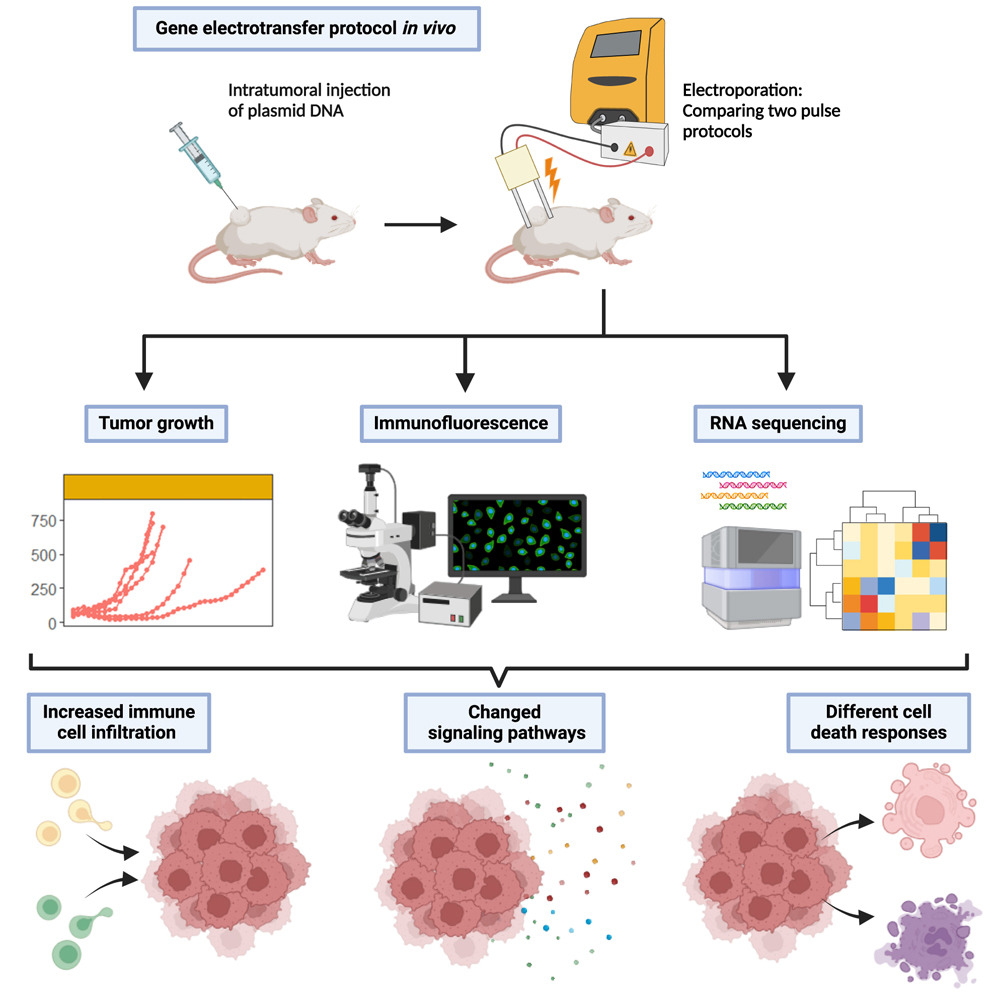
Gene electrotransfer (GET) has recently emerged as an effective nonviral approach for plasmid DNA (pDNA) delivery in gene therapy for several pathologies, including cancer. Multiple mechanisms have been identified that influence cell biology after GET, as electroporation significantly increases pDNA uptake and immunogenicity, which may directly influence target cell death. However, the molecular effects of in vivo electroporation-mediated DNA delivery have yet to be fully elucidated. In this study, we evaluated the transcriptomes of murine colorectal tumors treated with two protocols, short- and high-voltage (SHV) electric pulses or an adapted high-voltage-low-voltage (HV-LV) pulse protocol, both of which are used for reversible electroporation. Although no significant differences in clinical outcomes were observed, variations in intratumoral macrophage infiltration were reported between the two treatment methods. Transcriptomic analysis revealed that apoptosis is a predominant mode of cell death after GET by SHV pulses, whereas GET by HV-LV pulses is associated with immunogenic necrotic pathways as well as the activation of both the innate and adaptive immune response. We demonstrated that specific pulse parameters can induce distinct immunomodulatory profiles in the tumor microenvironment; therefore, these aspects should be considered carefully when selecting the most suitable GET-based approach for antitumor immunization.
Journal: Molecular Therapy: Nucleic Acids